What is Mailcow?
An open-source, Docker-based mail server suite that bundles Postfix, Dovecot, SOGo webmail, Rspamd and ClamAV, so you run business email on your own server instead of a hosted service.
Which DNS records does Mailcow need?
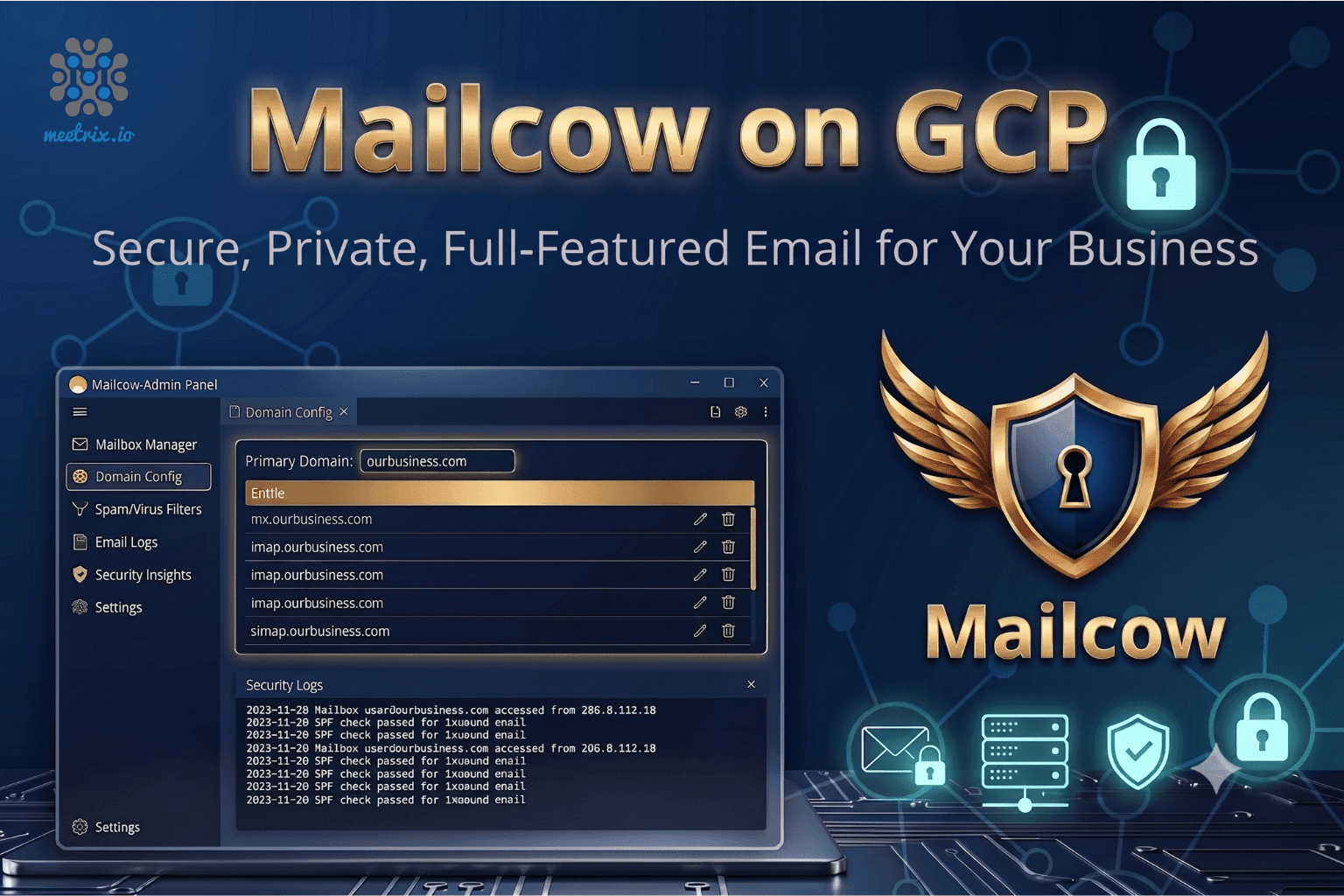
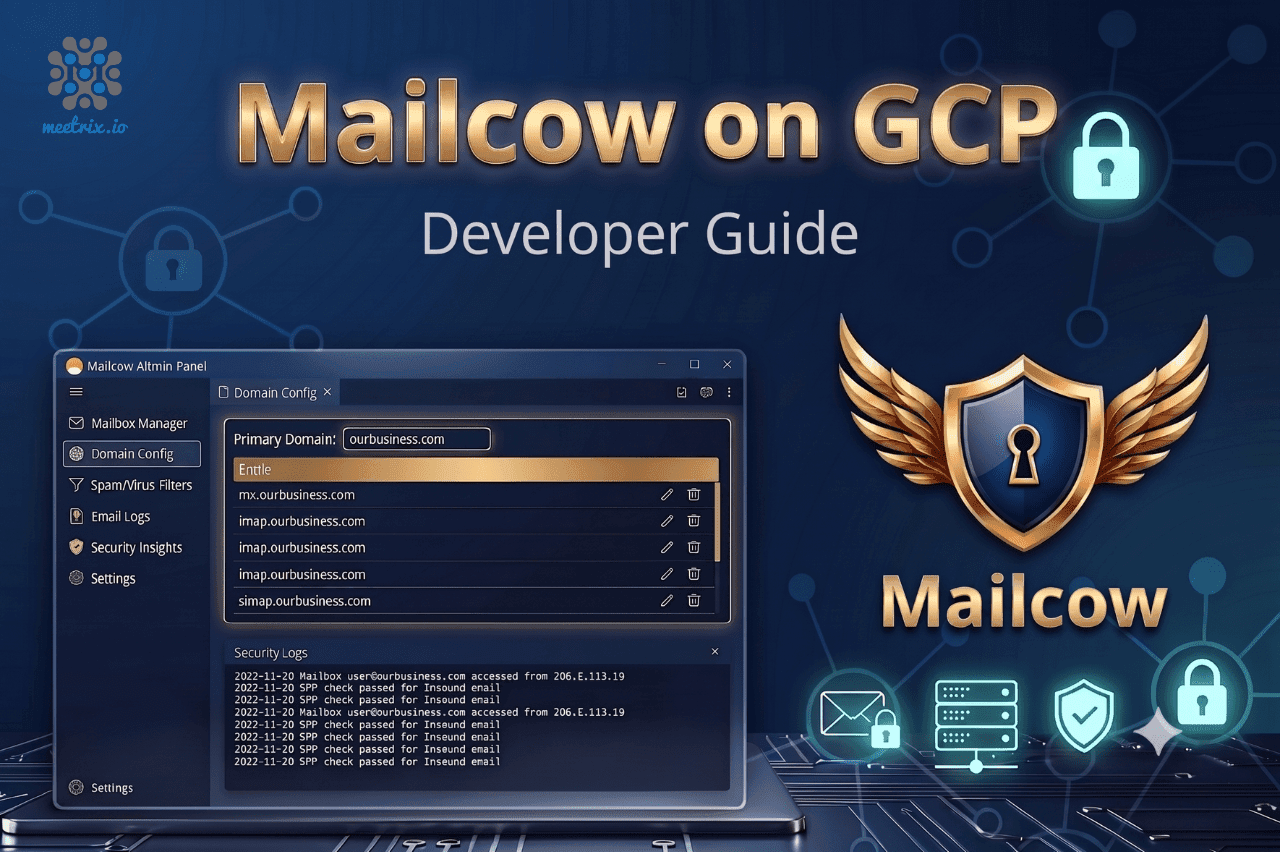
An A record for your mail hostname, an MX record for your domain, and a PTR record for the static IP. After adding the domain, publish the DKIM key Mailcow generates plus the SPF and DMARC records it recommends.
Do I need a static IP?
Yes. Reserve one before pointing DNS at the server. If the VM restarts on an ephemeral IP, the address can change and break your mail records and delivery.
Why is my mail landing in spam?
Check that the DKIM, SPF and DMARC records match what the admin panel shows and that the PTR record resolves to your mail hostname. A new sending IP also needs time to build a reputation.
Can I host more than one domain?
Yes. Mailcow does not limit domains or mailboxes; each domain has its own DKIM key and quotas. The practical limit is your machine type and disk size.
Does webmail work out of the box?
Yes. SOGo webmail is reachable at the same hostname once SSL has issued. Sign in with any mailbox you create.
How do I check the containers are healthy?
SSH into the server and run sudo docker ps -a. The postfix, dovecot, sogo, rspamd, clamd and other Mailcow containers should all show Up.
Is Mailcow available on AWS?
Not yet. The Meetrix Mailcow image is only on Google Cloud Marketplace today, and there is no AWS listing. If you need a mail server on AWS, contact us and we can talk through a setup.