What is Milvus used for?
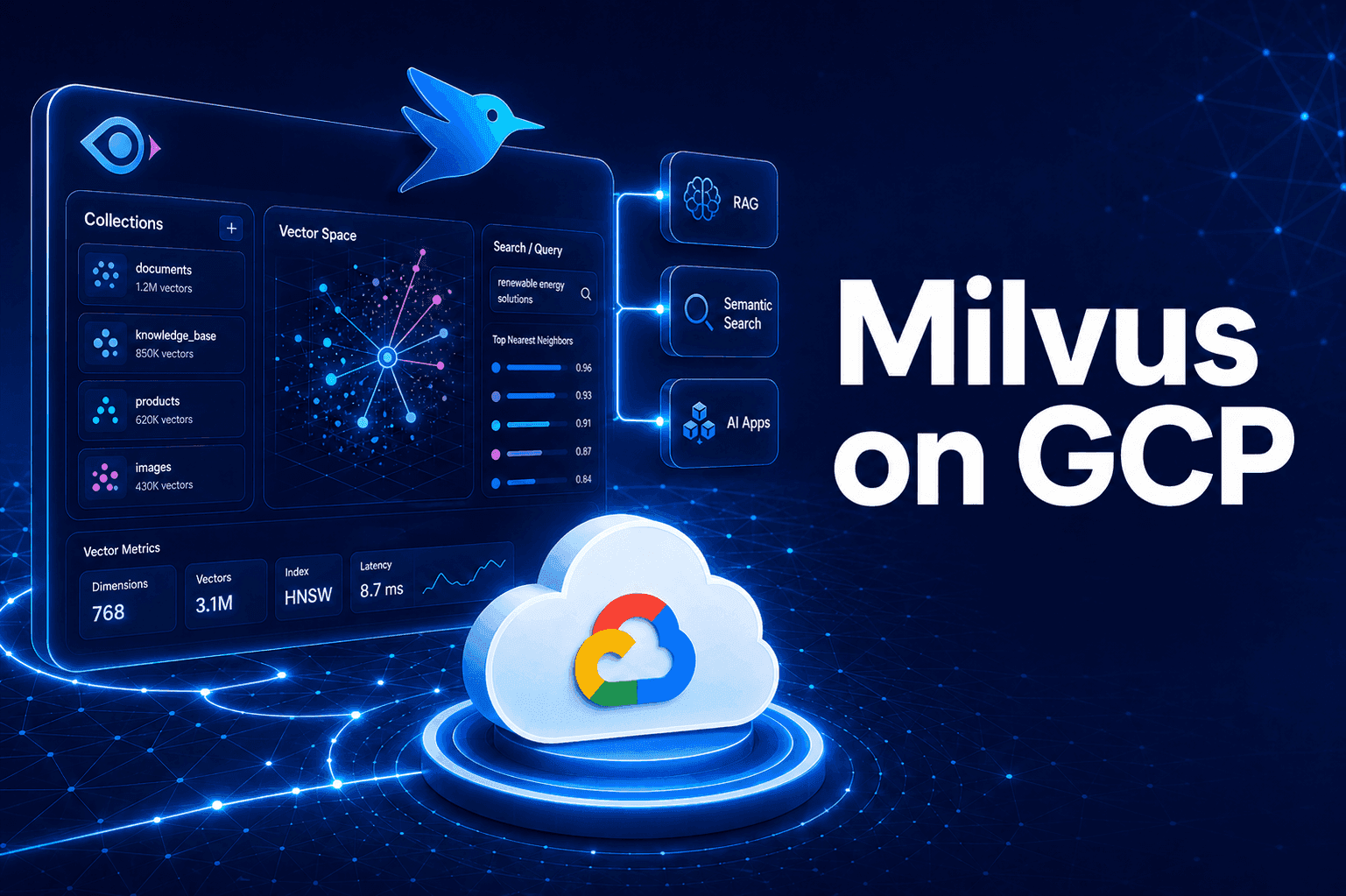
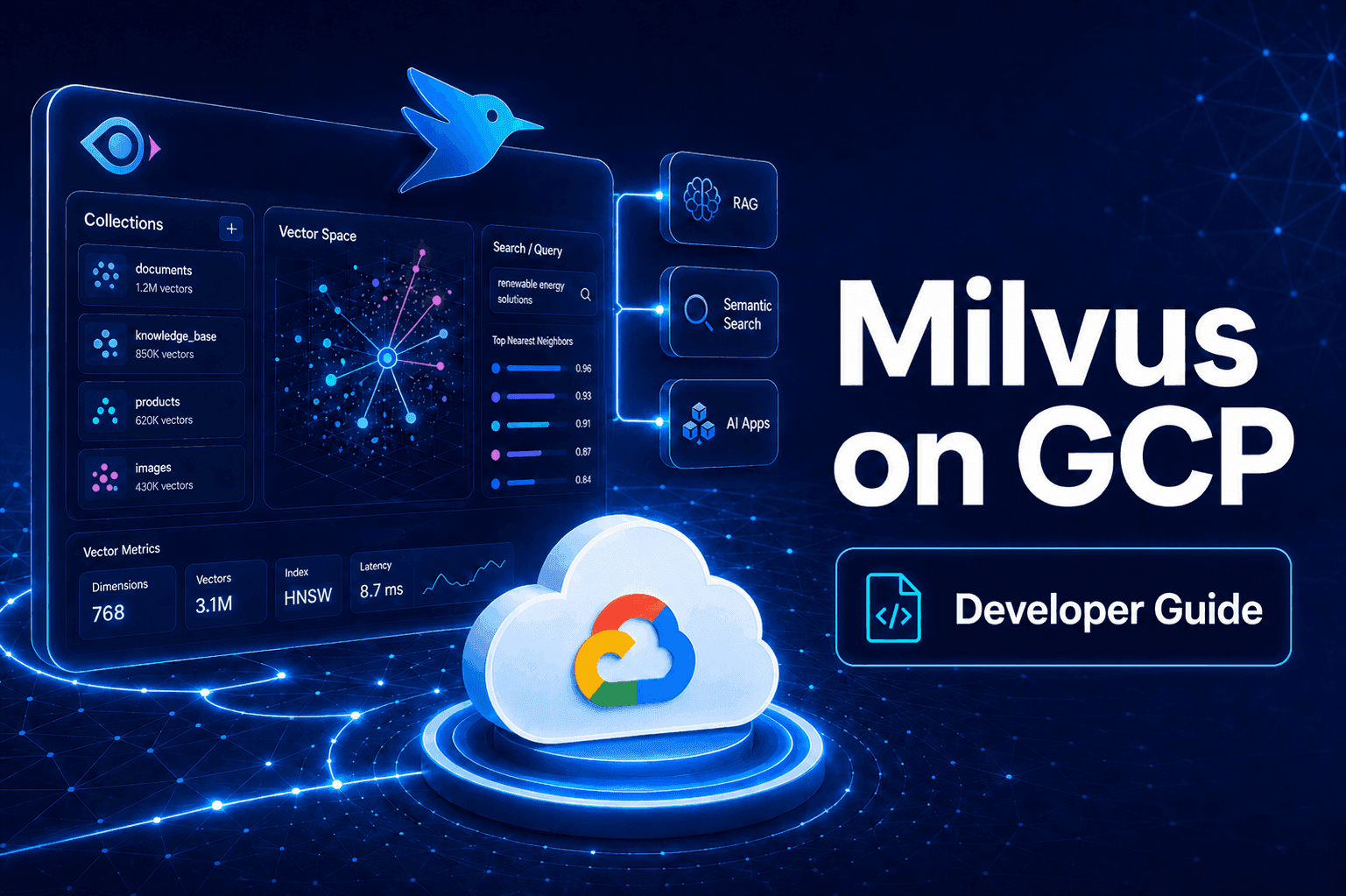
Storing and searching embedding vectors at scale: retrieval-augmented generation (RAG), semantic search, recommendation engines, and image or video similarity search. If your app turns content into vectors and needs the closest matches fast, that is what Milvus does.
Is Milvus free?
Milvus itself is open source and free. Through the Meetrix listings you pay standard AWS or Google Cloud compute costs for the server, plus any Meetrix software fee shown on the marketplace listing, not a per-vector or per-query fee.
Which machine size do I need?
t3a.large is the recommended starting point on AWS, and e2-standard-2 (2 vCPU, 8 GB RAM) with a 20 GB disk on Google Cloud. Resize the instance as your collections and query volume grow.
How do I connect to Milvus after launching it?
Use the pymilvus SDK with the server's public IP, port 19530 and the default root user. Visiting http://<server IP> in a browser shows a confirmation page once Milvus is running.
What is the default login?
The image ships with the admin user root and the password Milvus. Change the password before storing anything beyond test data.
Does it include a web admin UI?
No. Milvus does not ship one and the image stays lean. If you want a UI, run Attu, the open-source Milvus management tool, in a separate container pointed at port 19530.
Can I connect my existing RAG pipeline?
Yes. It is a standard Milvus instance, so in most cases you only change the host and port your client points at.
How do I upgrade?
When a new version is published on the marketplace, back up your Milvus data, remove the old deployment and launch the new version.